A Mixtape for Stom (2025)
Screener available upon request.
“A Mixtape for Stom” is an intimate documentary portrait of Japanese experimental filmmaker Stom Sogo (1975–2012), whose frenetic Super-8mm works became emblematic of New York’s underground cinema at the turn of the millennium. A close friend, filmmaker Adrian Goycoolea reflects on Sogo’s life and legacy, framing the film as a reply to the final email he received from him.
Scored by Joe Watson of Stereolab, “A Mixtape for Stom” is at once an elegy and an act of remembrance; a meditation on friendship and grief, and a testament to an underground legacy that continues to reverberate.
Drawing from personal archives, interviews, and memory, the film assembles a collage of Sogo’s art and presence: radiant, restless, and unresolved. Contributors include Jonas Mekas, Bruce McClure, Raha Raissnia, Julius Ziz, Ed Halter, Andy Lampert, and members of Sogo’s family, offering perspectives on his talent, struggles, and influence.
AI Jetée (2024)
“AI Jetée” is a shot-by-shot, generative AI reconstruction of Chris Marker’s seminal 1962 photo-roman, La Jetée. By utilizing AI to synthesize the film’s visual, sonic, and narrative components, the project interrogates the boundaries of authenticity and authorship in the age of algorithmic production. The resulting work leans into the inherent “hallucinations” of the technology—such as the fluid morphing of character identities and surreal visual glitches—to frame the AI’s unpredictability as a dreamlike expansion of Marker’s original themes of fragmented memory and temporal instability.
This project provides a sophisticated meta-commentary on the instability of the image. By applying generative tools to a film composed of frozen moments, it exposes the tension between the historical archive and the AI’s status as a pure simulacrum: a synthetic output that precedes its own reality. Rather than a mere copy, the AI produces a hyperreal interpretation that exists entirely within the latent space of its training data, challenging our understanding of cultural memory and cinematic legacy in an era where the distinction between the biological and the synthesized is increasingly blurred.
AI Jetée & La Jetée (2024)
A two-screen presentation of La Jetée and AI jetée side by side.
¡Viva Chile Mierda! (2014)
In 1974 Chile, the filmmaker’s aunt Gaby, her husband, and her brother were abducted and tortured by Pinochet’s military. Their children were held under guard, and they were aided by prison guard Andres ‘Papudo’ Valenzuela, who later confessed to the regime’s crimes; the film explores their lives and broader themes of exile, identity, truth, and reconciliation through various narrative techniques.
Still Live (2010)
In Still Live, filmmaker Adrian Goycoolea works with re-photographed images from turn-of-the-millennium American magazines, manipulating their glossy images optically and digitally to create an abstract collage. The piece transforms fashion photographs, advertising, and the odd animal into something rich and strange. Screened as part of a live performance by The New Music Players’ Chamber Concerto (2010) at Kings Place, London (Out Hear series).
Score by Ed Hughes Quartet (music 1998, commissioned by London Sinfonietta with funds from the RVW Trust) (c. 8′, performed by the New Music Players)
Breaking the Fourth Dimension: A Generative Re-Imagining of Chris Marker’s La Jetée (2024)
An AI clone presentation by “Adrian Goycoolea” about AI Jetée and generative AI generally.
Flight of the Humming Bird (2020)
In 1932, the filmmaker’s great-uncle Cyril Taylor became the first to fly across the Andes in a light aircraft to promote his aerial photography business, and Goycoolea’s film, “Flight of the Humming Bird,” uses 3D animation and drone cinematography to recreate this journey, reflecting on the historical and contemporary significance of aerial photography and flight.
Uncle Denis? (2009)
Born Denis Charles Pratt, Quentin Crisp was a writer, artist’s model, actor, and gay icon whose memoir, “The Naked Civil Servant,” and its 1975 film adaptation brought him fame; the documentary “UNCLE DENIS?” explores how Crisp, a public and queer figure, fits into family dynamics, using photographs, home movies, and interviews with relatives to examine the intersection of familial memory and public image.
The Ballad Of K69996 Roma (2021)
A music film by Adrian Goycoolea, based on Nick Hudson’s composition from Font Of Human Fractures, dedicated to Pier Paolo Pasolini and K69996 Roma. Filmed and edited by Adrian Goycoolea, it stars Nick Hudson and Kianna Blue. This visual homage focuses on the Alfa Romeo car with registration K69996, linked to Pasolini’s 1975 murder, as Hudson and Blue reinterpret Pasolini’s death in modern-day Brighton, with the narrative told from the car’s perspective. The film uses stark imagery and a somber palette to evoke the tragic circumstances surrounding Pasolini’s demise.
The Geographical Center of North America (2004)



Exploring amateur home movies through the “found” footage of Chester Swavel, an unknown filmmaker who documented the U.S. heartland, Goycoolea builds on Swavel’s 8mm footage, discovered when a friend purchased a projector that included his film reels. This footage, screened for public audiences, captivated viewers who, despite not knowing the individuals or specific stories, were drawn to recognizable places and the visible effects of time. Through a voiceover, Goycoolea emphasizes the “temporal disparity” felt by viewers—highlighting the visual contrast between Swavel’s past images and the present. The documentary raises questions about the appeal of private historical imagery and its ability to evoke nostalgia for an earlier America.
After the Flood (2020)
A music video for the World AIDS Day charity single, “The Bedroom / After the Flood,” by Oli Spleen featuring Nick Hudson. Proceeds benefit the Terrence Higgins Trust, a charity for those affected by HIV and AIDS. Recorded by Forbes Coleman at Audiobeach Studios and directed by Adrian Goycoolea, it includes archival footage from ACT UP, courtesy of James Wentzy. Cover art by John Lee Bird. The single is available on various platforms to support this vital cause. #WorldAIDSDay2019
Memories of a Blind Father (1997)
This experimental short imagines the visions of a blind man struggling to remember the faces of his loved ones, portraying his emotional journey through a world of shadows and recollections. Shot frame by frame on 16mm, it rephotographs still images from home video footage, creating a tapestry of nostalgic memories interwoven with light and dark. The film explores human connection through absence and longing, inviting viewers to reflect on their own perceptions of love and memory. Each frame is a reminder of the faces that once brought joy, highlighting the beauty and tragedy of ephemeral moments captured in time.
Quentin (2000)
An Installation by Adrian Goycoolea in collaboration with Phillip Ward and Crisperanto: The Quentin Crisp Archives
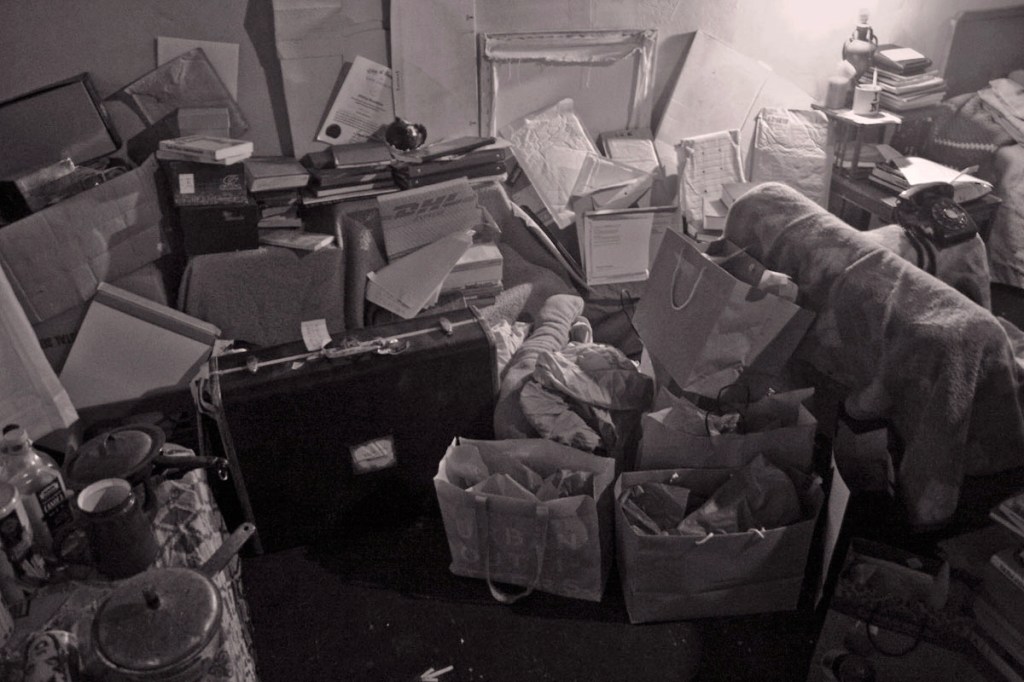
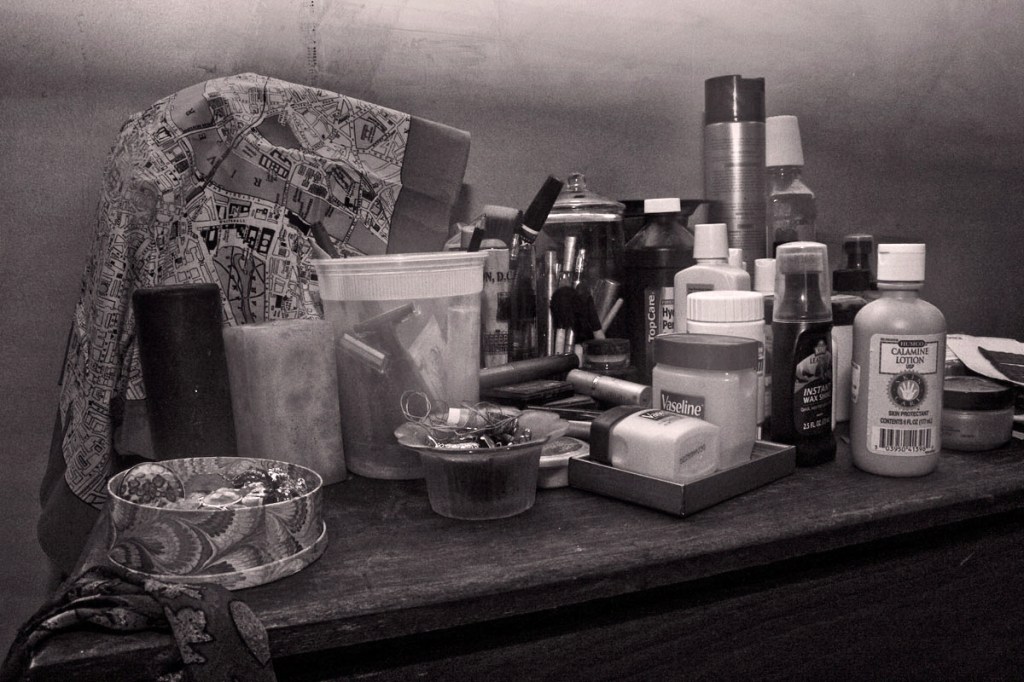
This installation at the 2010 MIX NYC Festival recreates the Lower East Side studio apartment of English writer and queer icon Quentin Crisp. Many items here belonged to Crisp, with replicas replacing unavailable pieces. A film portrait on the television combines family home movies, archival footage, and sound from his one-man show, An Evening with Quentin Crisp.
Crisp saw the world as his stage, and this space as his backstage—his private sanctuary for thought, writing, and refining his philosophy. Despite his meticulous personal style, he avoided housework, believing energy was better spent on self-exploration. The installation invites viewers to reconcile his carefully crafted public persona with the intimate reality of his living space. Crisp lived at the Eastwick Hotel, 46 East 3rd Street, from 1981 until his death in 1999.
 Adrian goycoolea