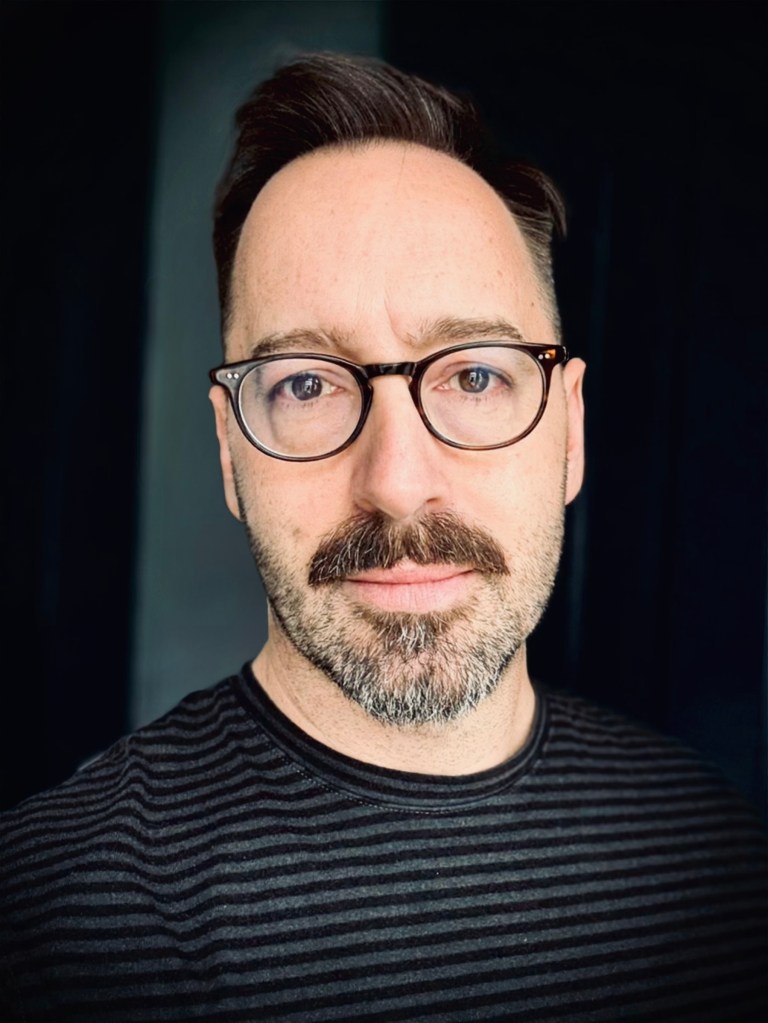
Adrian Goycoolea is a filmmaker known for his deeply personal and reflective documentaries. He explores themes of history, identity, and memory through his works. Goycoolea has directed award-winning films such as “Flight of the Humming Bird,” which recounts his great-uncle Cyril Taylor’s historic flight across the Andes, and “Uncle Denis?,” which examines the life and familial relationships of his great-uncle Quentin Crisp, a renowned writer and gay icon. His film “¡Viva Chile Mierda!” portrays the traumatic experiences of his family during Pinochet’s regime in Chile, highlighting themes of exile, national identity, and reconciliation; it was named one of the 10 best Chilean films of 2014 by Twitch Film. His films often blend intimate interviews, archival materials, and innovative visual techniques to create compelling narratives that connect personal stories to broader social and historical contexts. Goycoolea is also a Senior Lecturer in Filmmaking at the University of Sussex.
Adrian Goycoolea is Associate Professor in Filmmaking at the University of Sussex and a practice-based researcher working across experimental, documentary, and hybrid screen forms. Raised in Brazil, Chile, and the United States and now in Britain, his work intersects the personal with the historical, cultural and political. His research addresses the intersection of personal memory and political and cultural histories, experimental film theory and practice, documentary ethics and practice, queer studies, and critical and creative usage of artificial intelligence, as well as mixed media and intermedia production. Through projects such as A Mixtape for Stom, ¡Viva Chile Mierda! and the generative homage AI Jetée, his work explores the intersection of memory, history, politics and form. Adrian has also led major programme-building initiatives at Sussex, including the creation of the BA Filmmaking and MA Filmmaking degrees, and he supervises doctoral work in creative and critical practice. His films are held in significant archives such as the BFI National Archive and the Pier Paolo Pasolini Archives and continue to circulate in competitive international festivals and galleries.
 Adrian goycoolea